Blessed to Be Broken stained-glass butterfly
A digital retreat in the Ignatian tradition

The Soul of Intelligence

Artificial intelligence asks what machines can do. Spiritual intelligence asks what human beings are becoming—and whether our choices lead toward greater freedom, deeper communion and more loving service.

Enter the retreat ↓

With Fr. Justin Kelly, S.J.
Theologian in Residence & Board Member

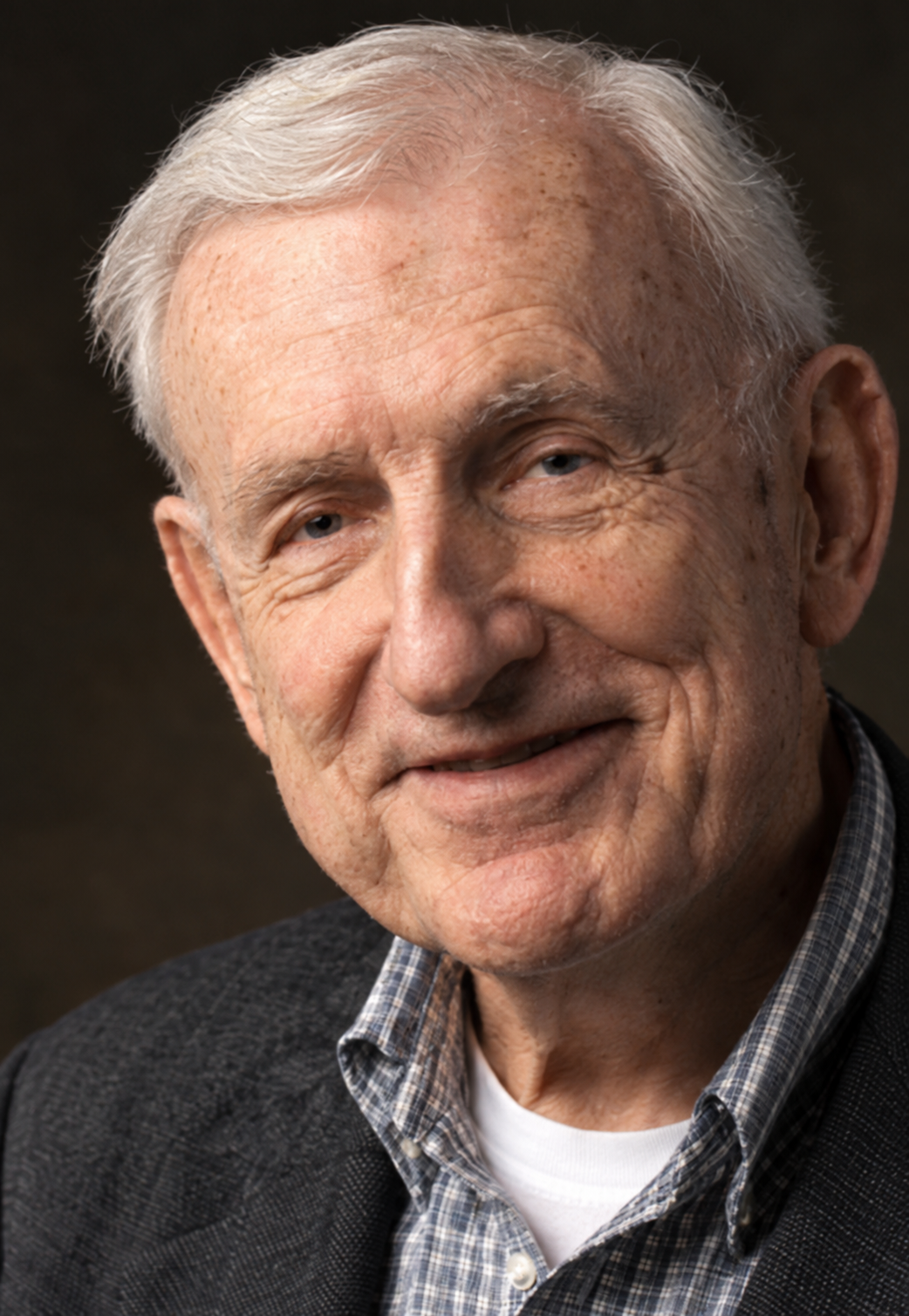
Fr. Justin Kelly, S.J., Theologian in Residence and Board Member
Restored portrait from the photograph supplied for this retreat.
Theologian in Residence · Board Member

Fr. Justin Kelly, S.J.

A lifetime of Jesuit service. A continuing invitation to think deeply.

Fr. Justin Kelly is a Jesuit priest and Professor Emeritus of Religious Studies at the University of Detroit Mercy. After joining the university faculty in 1972, he served its community for 52 years before retiring in 2024. That same year, he was honored for 70 years in the Society of Jesus.

At Blessed to Be Broken, he serves as our Theologian in Residence and Board Member. His place in this community connects our exploration of human transformation with a long vocation of scholarship, faith and service.

52 yearsof university service
70 yearsin the Society of Jesus, celebrated in 2024

His engagement with theological inquiry continued into retirement: on November 14, 2024, he presented “Could Jesus Be Wrong? A Theological Thesis with Practical Consequences” at a Detroit Mercy faculty colloquium.

University profile ↗ · Colloquium and retirement notice ↗ · Jesuit jubilee ↗

An introduction to the conversation

Faith that makes room
for serious questions.

Fr. Justin’s 2024 colloquium title places a challenging theological question beside its practical consequences. It offers an opening for this retreat: what happens when our understanding of faith meets the complexity of lived experience?

The university notice records the talk’s title, not its argument. The reflections below are the retreat’s own invitations; they do not summarize his thesis or attribute an AI position to him.

Inquiry

Bring the difficult question.

Faith can be practiced with intellectual honesty. Name the question you are reluctant to ask, and examine whether your reluctance comes from reverence, fear, habit or the desire to belong.

Which question would deepen my faith if I stopped treating it as a threat?
Consequences

Let theology touch a life.

A theological idea becomes consequential in how we teach, forgive, exercise authority and respond to vulnerability. Test a conviction by asking what it makes possible for another person.

How does this belief change the way I treat someone with less power?
Humility

Distinguish certainty from trust.

In a culture of instantaneous answers, spiritual maturity may involve acknowledging the limits of our knowledge. Trust can sustain inquiry without requiring us to pretend that every question is settled.

Can I remain responsible while admitting that I do not yet know?
Meet him through his own account

Jesuit History and Spirituality Project

The interview link supplied for this retreat offers a place to encounter Fr. Justin’s story directly. Listen for the experiences, relationships and questions that have shaped a life of Jesuit education.

Open the oral-history interview ↗
A discernment compass

Four questions before every use.

Jesuit discernment does not begin by labeling technology good or bad. It asks what a choice is doing to the whole person and to the web of relationships around them. Choose a lens to begin.

Human dignityDoes this use honor the person as a mystery and moral subject—not merely a profile, user, audience or data source?
Who is this person beyond the data?
The theological ground beneath us

A person is more
than a performance.

Six convictions to carry through the retreat. These are interpretive lenses rooted in Scripture and Catholic tradition, inviting careful judgment rather than automatic answers.

Imago Dei

Dignity before ability

Genesis 1:26–27 anchors human worth in being created in God’s image. Dignity does not rise with cognitive performance or fall with disability, dependency or age. An AI benchmark cannot measure the worth of a neighbor.

When a tool ranks people, which forms of dignity become invisible?
Incarnation

The body belongs in the story

John 1:14 places flesh at the heart of Christian faith. Touch, fatigue, grief and shared meals are not obstacles to a spiritual life. They are part of the life in which we encounter God and one another.

Which embodied encounter should this tool help me return to?
Grace & the Paschal mystery

Life beyond the logic of achievement

Ephesians 2:8–10 holds gift and good works together. Christian hope passes through the cross toward resurrection; it does not require us to call every wound good. “Blessed to Be Broken” invites truthful lament, accompaniment and repair, never the romanticizing of suffering.

Can I receive care before proving that I deserve it?
Ignatian freedom

Use what helps; release what binds

The Principle and Foundation of the Spiritual Exercises orders created things toward love and service. Freedom means holding a useful tool lightly enough to set it aside when it displaces a deeper good.

Am I choosing this tool, or obeying a habit?
Catholic social teaching

Solidarity with a name and a face

The common good includes the conditions that let people and communities flourish. Solidarity asks who carries the burden; subsidiarity asks whether those affected have meaningful agency. An efficient system still needs accountable institutions.

Who should have a voice before this system is adopted?
Sabbath & play

A life that need not justify every hour

Genesis 2:2–3 gives rest a place in creation’s rhythm. Play and shared delight invite us to value activity beyond its output. A life received as gift has room for receptivity, humility and belonging.

What will I do this week simply because it is good to be alive?

Further grounding: Antiqua et Nova · Ignatian rules for discernment

Five movements

Begin with attention, not answers.

Ignatian spirituality enters uncertainty by noticing: the movements within us, the people affected by our choices, and the invitation hidden inside disruption. Move slowly. Read one movement at a time. Let each question work on you.

Movement one

Name what is cracking open.

AI is not only a tool entering our lives. It is a revelation of what our culture already prizes: speed, scale, prediction, optimization and frictionless performance. The first spiritual task is honesty. Where has efficiency become a substitute for wisdom? Where have we begun to treat persons as problems to be processed?

Every fracture can become an opening. What is exposed can also become the place of formation.

Grace to ask for: the courage to see clearly without panic, denial or fascination.

Lament before a solution

Pray with Psalm 13. Give the loss a name before proposing an improvement. A displaced worker, an anxious student and a lonely elder each deserve to be heard as a person, not folded into a story of inevitable progress.

Go deeper · When usefulness becomes identity

Imagine that a tool can now perform the task for which you have been most praised. Name the real economic worry, then the deeper question about identity. These deserve different kinds of care.

What have I mistaken for my worth because other people reward it?

Try this: Write two sentences: “I am afraid of losing…” and “Even then, I remain…” Pray with Psalm 139:1–18.

For conversation with Fr. Justin · Beyond the fear of being replaced

Proposed retreat commentary for his review · not a quotation or approved statement.

When a familiar role begins to change, we may discover how closely we have joined usefulness to identity. Christian reflection begins by receiving the person before evaluating the performance. What part of your life needs reassurance, and what part needs courageous change?

Pause and notice

Movement two

Remember what a person is.

Catholic thought does not reduce intelligence to computation. A person is embodied, relational, morally responsible and open to God. Human intelligence includes reason, but also memory, conscience, imagination, desire, love, vulnerability and the capacity to receive another as gift.

The human person is never merely a user, a data point, a profile or a predictable pattern.

Grace to ask for: wonder before the irreducible dignity of every person.

Receive the whole person

Pray with John 1:14. Catholic theological anthropology holds body and soul together. Our ability to need, give and receive care belongs to our humanity; dependence is not a defect that greater intelligence will erase.

Go deeper · When the score becomes the person

A school, employer or care team receives an automated ranking. It may contain useful evidence; it cannot exhaust a person’s story. Imagine the decision from the perspective of someone the ranking misunderstands.

What would I need to know before allowing this score to shape a life?

Try this: Name one person whose gifts took time to recognize. What form of patient attention made recognition possible?

For conversation with Fr. Justin · The human life behind the answer

Proposed retreat commentary for his review · not a quotation or approved statement.

A person learns through a history of relationships, mistakes, commitments and grace. When a machine produces a convincing answer, ask what kind of formation remains necessary in the person who will use it.

The human remainder

Movement three

Discern the spirits in the machine age.

Ignatian discernment asks what a choice produces over time. Does it deepen faith, hope, love, freedom and service—or feed anxiety, isolation, vanity, dependency and indifference? Consolation is not comfort; it is movement toward greater life in God and others. Desolation closes the self in.

Not everything possible is wise. Not everything efficient is free. Not everything convincing is true.

Grace to ask for: interior freedom—the ability to use, limit or refuse technology for the greater good.

Discern over time

Pray with Galatians 5:22–23. A pleasant feeling is not proof of consolation, and difficulty is not proof of desolation. Attend to the direction of a desire and its fruits over time, with prayer, honest conversation and spiritual accompaniment.

Go deeper · When the answer flatters you

An AI response confirms a decision you already want to make. Ease and agreement can feel like clarity. Discernment includes testing the assumptions, seeking contrary evidence and speaking with someone free to disagree.

Am I looking for wisdom, permission or relief from responsibility?

Try this: Write the strongest objection to your preferred choice. Return to it after silence and a conversation with a trusted person.

For conversation with Fr. Justin · The freedom to ask another question

Proposed retreat commentary for his review · not a quotation or approved statement.

Do not let the fluency of an answer end your inquiry. Examine its assumptions, seek the perspective it leaves out, and bring your judgment back to the people who will live with its consequences.

Consolation or desolation

Movement four

Choose communion over simulation.

AI can imitate language of empathy and companionship. But Christian communion requires mutuality, embodiment, responsibility and the risk of being changed by another person. The question is not whether a system sounds caring, but whether its use strengthens our capacity to care.

Technology serves the common good when it returns us more fully to one another—especially to those most easily unseen.

Grace to ask for: a love that becomes proximity, solidarity and action.

Let love become concrete

Pray with Luke 10:25–37. The Good Samaritan interrupts his journey, spends resources and returns responsibility to a community of care. Ask what your use of AI makes possible for a real neighbor—and what it tempts you to avoid.

Go deeper · When help becomes avoidance

You use AI to draft a difficult apology. The words are polished, but the relationship still requires truth, listening and a willingness to make amends. Consider where assistance ends and personal responsibility begins.

What part of this encounter can only I offer?

Try this: Name the harm plainly in your own words. Ask what repair would mean to the other person, rather than deciding for them.

For conversation with Fr. Justin · A theology tested by encounter

Proposed retreat commentary for his review · not a quotation or approved statement.

Our ideas about humanity become real in encounters with particular people. Before asking whether a tool can imitate care, ask whether using it helps us become more truthful, patient and accountable in our care for others.

Circle of consequence

Movement five

Make a rule of life for AI.

Discernment becomes practice through commitments. A rule of life protects what matters before pressure arrives: truthful attribution, periods of technological sabbath, human review of consequential decisions, consent for personal data, and spaces where presence is never outsourced.

Brokenness becomes formation. Formation becomes leadership. Leadership becomes service.

Grace to ask for: fidelity to one concrete next step.

Protect gratuitous time

Pray with Mark 2:27. A rule of life is a support for love, not a productivity score. Leave room for play, worship, friendship and silence without demanding that they make you more efficient.

Go deeper · When saved time disappears

A faster workflow creates space, then new expectations consume it. A rule of life asks who benefits from the gain and whether efficiency actually opens room for humane work, care or rest.

Who receives the time we save?

Try this: Protect one period this week for a shared meal, prayer, walking or play. Decide in advance what you will leave unfinished.

For conversation with Fr. Justin · Learning that does not end with a role

Proposed retreat commentary for his review · not a quotation or approved statement.

A vocation may continue through changing forms of work and service. Consider which commitments endure beneath your job title, and how a new season might call them into a different expression.

Your commitment

Hands held gently in tall grass at golden hour
Contemplation in action
Before we ask what intelligence can produce, we ask what our attention is becoming.

Pause here. Let your hands unclench. In the Ignatian tradition, discernment begins with presence: receiving reality before trying to master it.

The field of inquiry

The questions beneath the questions.

AI gathers many theological, spiritual and social questions into one moment. Explore the terrain by lens.

01 / Imago Dei

Personhood and dignity

If intelligence can be simulated, what makes a person more than intelligence? How does embodiment matter?

02 / Conscience

Agency and responsibility

Which decisions must remain human? Can responsibility be delegated without being dissolved?

03 / Discernment

Freedom and attachment

When does assistance expand freedom—and when does convenience quietly train dependence?

04 / Prayer

Presence and simulated care

Can an AI be a spiritual companion? What is missing when listening has no embodied listener?

05 / Truth

Knowledge and wisdom

How do we distinguish plausible language from truth, data from understanding, prediction from judgment?

06 / Creation

Creativity and authorship

What do artists owe the sources on which models are trained? How can tools serve rather than flatten voice?

07 / Vocation

Work and human purpose

If tasks disappear, how will dignity, livelihood, craft and contribution be protected?

08 / Justice

Bias power and exclusion

Whose values become code? Who can contest a decision? Who is absent from the design table?

09 / Solidarity

Surveillance and privacy

What does respect for interior life require in a world that can infer, rank and monitor?

10 / Peace

War and autonomous weapons

Can a machine ever be permitted to decide to take a human life?

11 / Integral ecology

Energy matter and the earth

What are the hidden material, water, labor and climate costs of seemingly immaterial intelligence?

12 / Formation

Education and young people

What capacities atrophy when answers arrive before struggle, memory, dialogue and intellectual maturity?

13 / Care

Medicine and vulnerability

Where can AI improve care—and where must the gaze, touch and accountability of a person remain?

14 / Governance

The universal common good

What institutions can govern systems whose reach exceeds borders and whose power is privately concentrated?

15 / Hope

Human futures

Can technological imagination be converted from mastery and escape toward repair, participation and service?

Questions to stay with

Let the question
become more demanding.

Choose one tension. Resist resolving it too quickly. These original retreat reflections bring biblical and theological themes into conversation with daily technological choices.

01 · Creation & control

When does making become mastery?

Genesis 2:15 places human beings in a garden to cultivate and care for it. Technical creativity can serve that vocation. It becomes distorted when the world and its people appear only as material available to our will.

Where does stewardship require a limit on what I can do?
02 · Knowledge & wisdom

What does an answer leave out?

A response can be accurate yet poorly timed, insensitive or morally incomplete. Wisdom attends to persons, purposes and consequences. In prayer, ask not only whether an answer is correct but what receiving it asks of you.

What would change if I had to live with the consequences beside those affected?
03 · Humility & mystery

Can I remain with what I cannot solve?

Job challenges the expectation that suffering can be made transparent by a tidy explanation. Some questions call first for presence, lament and practical help. Mystery is not an excuse for ignorance; it can be a discipline against false certainty.

Where have I offered an explanation when someone needed companionship?
04 · Justice & power

Who gets to refuse?

A tool is not meaningfully optional when refusing it costs someone their livelihood, education or access to care. Solidarity asks us to examine the conditions of consent, not simply whether a box was checked.

What would genuine choice require for the least powerful person here?
05 · Formation & freedom

What is this habit teaching me to love?

Repeated actions shape what feels normal and desirable. A helpful shortcut can gradually train impatience with learning, other people or uncertainty. Virtue grows through practices that school desire toward truth and love.

Which capacity do I want to keep exercising even when a machine can perform the task?
06 · Hope & salvation

What future am I asking technology to promise?

Christian hope permits invention without making innovation our redeemer. Resurrection is not a promise of frictionless existence or endless self-improvement. It directs attention toward renewed life with God and neighbor.

Which promise of control makes it harder for me to accept vulnerability, dependence or grace?
A circle of friends holding one another outdoors
Communion over simulation
The measure of intelligence is not mastery alone, but whether it returns us more fully to one another.

AI may imitate care. Communion asks more: mutuality, embodiment, responsibility, and the willingness to be changed by another person.

A daily practice

An Ignatian examen for AI.

Five minutes at the end of a day—or after a consequential use of AI.

1Become present
2Give thanks
3Review honestly
4Ask forgiveness
5Choose tomorrow

Arrive

Place both feet on the ground. Breathe. Remember that your worth does not depend on speed, output or mastery.

Receive

Where did technology genuinely help you understand, create, serve or connect today? Give thanks without exaggeration.

Notice

Replay your uses of AI. When did you feel more free, attentive and generous? When did you feel hurried, passive, performative or detached?

Repair

Did your use obscure authorship, bypass consent, reproduce harm, waste another's labor or replace a conversation you needed to have?

Respond

Choose one small act for tomorrow: verify a claim, credit a source, ask permission, slow a decision, speak to a person, or leave the tool unused.

A communion of voices

Thinkers for the machine age.

No single discipline is enough. These voices bring papal teaching, Ignatian spirituality, theology, ethics, science and cultural critique into conversation.

Theologian in Residence · Board Member

Fr. Justin Kelly, S.J.

Professor Emeritus at Detroit Mercy, with 52 years of university service and a Jesuit jubilee marking 70 years in the Society in 2024. His biography and documented colloquium open a conversation about faith, inquiry and practical consequences.

Meet Fr. Justin ↗
Papal teaching

Pope Leo XIV

Frames AI as a defining challenge to human dignity, youth formation and the depth of relationships, insisting that data access is not the same as mature intelligence.

Begin with dignity and responsibility
Papal teaching

Pope Francis

Called for meaningful human control, warned against a technocratic paradigm and placed fraternity, peace and the vulnerable at the center of AI ethics.

Human decision must not disappear
Ignatian spirituality

St Ignatius of Loyola

Offers the grammar for this retreat: attention to interior movements, freedom from disordered attachment and decisions ordered toward love and service.

Discern by the fruits
Jesuit digital theology

Antonio Spadaro SJ

Explores digital culture as a lived environment rather than an external instrument, asking how faith, authority, community and incarnation change within it.

Technology is an environment
Science and faith

Guy Consolmagno SJ

Models a Catholic posture toward science marked by curiosity, humility and wonder—essential virtues amid inflated claims about machine omniscience.

Wonder without idolatry
Franciscan AI ethics

Paolo Benanti TOR

Develops “algorethics”: translating human values into the design and governance of algorithms, with special attention to work, power and responsibility.

Ethics must enter design
Theology and AI

Noreen Herzfeld

Examines AI through the image of God, arguing that relationality—not raw rational capacity—is central to theological anthropology.

The image is relational
Technology and evolution

Ilia Delio OSF

Reads technology within cosmic and spiritual evolution, pressing theology to engage emergence while remaining rooted in love, participation and Christic wholeness.

Technology inside a larger becoming
Applied ethics

Brian Patrick Green

Connects Catholic moral thought with responsible innovation, emphasizing practical governance, virtue and institutions capable of shaping technology toward good.

Build structures for moral agency
Theology and cognition

Mark Graves

Brings cognitive science, computer science and theology together to ask what AI reveals—and fails to capture—about human intelligence and moral formation.

Intelligence is more than performance
Technology and virtue

Shannon Vallor

Asks which virtues people and institutions need to flourish amid technologies whose consequences exceed any one designer or user.

Form character for uncertain futures
Power and materiality

Kate Crawford

Reveals the labor, extraction, classification and political power beneath AI, widening moral attention beyond the interface to the whole system.

See what the machine conceals
The listening room

Voices to hear slowly.

Five public conversations across Jesuit, Franciscan and wider Christian thought. Choose one; listen with a notebook. The provocation matters more than finishing the queue.

Franciscan theology · science and religion

Why AI Needs Religion · Ilia Delio OSF

Delio places AI inside a larger story of evolution, consciousness and spiritual wholeness, resisting both panic and technological messianism.

If technology expresses our deepest desires, what image of salvation is encoded in the systems we build?
Franciscan ethics · human responsibility

What Can AI Teach Us About Humanity? · Paolo Benanti TOR & James Manyika

A dialogue about what machines expose in human values and why ethical judgment must remain upstream of deployment.

Which human good disappears when efficiency becomes the first question?
Jesuit theology · digital culture

Cybertheology: Thinking Faith in the Digital Age · Antonio Spadaro SJ

Spadaro treats the digital realm as an environment that reshapes authority, community, presence and belief—not simply as a neutral tool.

How is the network already training the way we imagine God, neighbor and self?
Jesuit science · wonder

Science, Religion & the Art of Storytelling · Guy Consolmagno SJ

The Vatican astronomer models curiosity without idolatry and a form of knowing that remains humble before mystery.

What becomes possible when intelligence begins in wonder rather than control?
Theological anthropology · relationship

What Does It Mean to Be Human in the Age of AI? · Noreen Herzfeld

Herzfeld returns the imago Dei to relationship, responsibility and love rather than reducing personhood to rational performance.

If likeness to God is relational, what can a machine simulate without ever possessing?
BeforeName the question you are bringing.
DuringPause where attraction or resistance appears.
AfterWrite one conviction—and one unresolved tension.
The reading room

Texts worth sitting with.

A curated path from foundational Catholic teaching to contemporary theological and ethical inquiry. Open slowly; read with a pencil and a question.

Vatican Dicasteries · 2025

Antiqua et Nova

A substantial Vatican account of the relationship between artificial and human intelligence, spanning anthropology, education, work, health, war, relationships and truth.

↗
Pope Francis · G7 · 2024

Artificial Intelligence A Fascinating and Fearsome Tool

A landmark call to preserve meaningful human decision-making and prevent machines from choosing who lives or dies.

↗
Pope Francis · World Day of Peace · 2024

Artificial Intelligence and Peace

Connects AI to dignity, labor, education, surveillance, weapons, international law and the need for an inclusive technological future.

↗
Pontifical Academy for Life

Rome Call for AI Ethics

Six principles for an ethical approach: transparency, inclusion, responsibility, impartiality, reliability, security and privacy.

↗
Pope Francis · 2015

Laudato Si

The indispensable critique of the technocratic paradigm and a vision of integral ecology in which social, spiritual and environmental consequences belong together.

↗
Pope Francis · 2020

Fratelli Tutti

A theology of fraternity, encounter and social friendship against isolation, disposable lives and technological connection without communion.

↗
Ignatian Spirituality · James Martin SJ

Magis

A corrective to optimization culture: “the more” means the greater service of God and the universal good, not maximum output.

↗
Santa Clara University · Markkula Center

What Is Ethics

A practical foundation for moving from preference and legality toward rights, fairness, virtue, common good and moral responsibility.

↗
The companion bookshelf

Older wisdom.
Present-tense questions.

Thoreau is our nineteenth-century companion; contemporary voices extend the conversation. Catholic theology, contemplative writing, Indigenous ecology and cultural criticism retain their distinct perspectives here. The pairings and questions are the retreat’s own.

01
Henry David Thoreau · 1854 · A nineteenth-century classic

Walden ↗

A conversation partner on deliberate living, simplicity and attention. Begin with “Where I Lived, and What I Lived For.”

Which convenience costs more of my life than it returns?
02
Thomas Merton · 1961 · Contemplative Christianity

New Seeds of Contemplation ↗

Bring the question of the inner life to a culture of public performance. Read a short passage slowly, then sit in silence.

Who am I when there is no audience and nothing to optimize?
03
Henri J. M. Nouwen · 1992 · Art & spiritual life

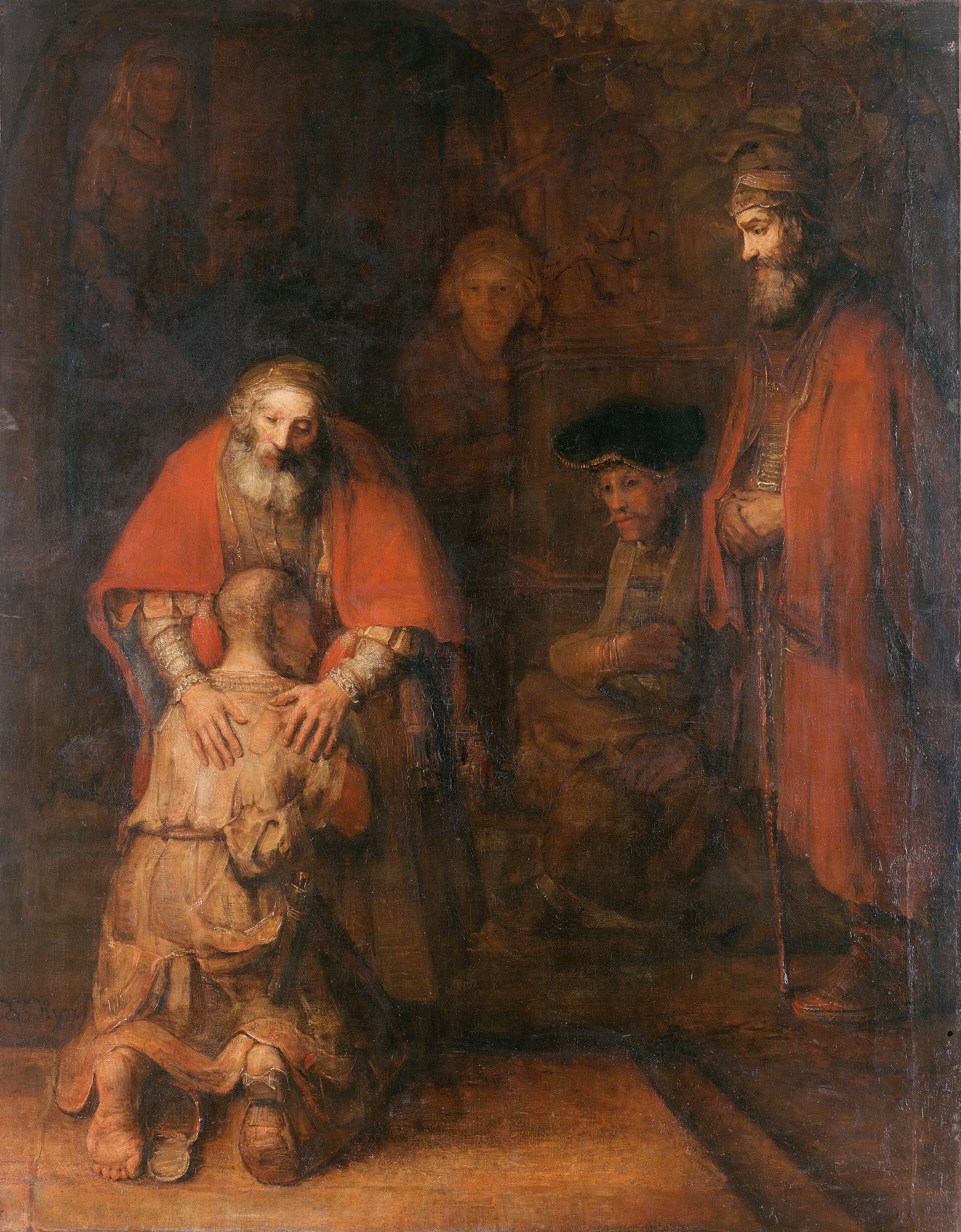
The Return of the Prodigal Son ↗

A spiritual encounter with Rembrandt’s painting. Pair it with the gallery and consider the positions of both sons and the father.

Am I willing to receive mercy—and become a person who offers it?
04
Jenny Odell · 2019 · Contemporary cultural criticism

How to Do Nothing ↗

A challenge to the attention economy and the habit of valuing every moment through productivity. Pair with the Fracture movement.

What local relationship or living place deserves my recovered attention?
05
Robin Wall Kimmerer · 2013 · Indigenous wisdom & ecology

Braiding Sweetgrass ↗

An invitation into ecological reciprocity, bringing Indigenous knowledge and botany into conversation. Let this distinct tradition question our habits of extraction.

What would reciprocity ask of the resources behind my digital life?
06
Shannon Vallor · 2024 · Contemporary philosophy

The AI Mirror ↗

A philosophical companion to the question of what AI reflects about us. Read alongside the discussion of moral agency and human futures.

Am I treating an inherited pattern as the limit of what we can become?
07
Astra Taylor · 2023 · Contemporary social criticism

The Age of Insecurity ↗

A social critique of insecurity and the structures that reproduce it. Bring its questions into dialogue with solidarity and the common good.

Which insecurity needs collective care rather than a personal technological fix?
08
Abraham Joshua Heschel · Jewish spirituality

The Sabbath ↗

Encounter a Jewish account of sacred time on its own terms. Bring its challenge to our assumption that every hour should produce something.

If rest is sacred rather than earned, what changes in the way I treat myself and the people who work for me?
09
Simone Weil · Philosophy & spiritual attention

Waiting for God ↗

Read slowly around attention, affliction and openness to God. Consider attention as a demanding form of receptivity, rather than merely concentration on a task.

Can I listen to another person without immediately organizing their suffering into an explanation?
10
Oliver Burkeman · Contemporary philosophy of time

Four Thousand Weeks ↗

A companion for confronting finitude and the fantasy of finally getting everything done. Pair with the Renewal movement and choose what deserves your limited life.

If AI gives me back an hour, will I fill it with more demands—or give it to something I love?
11
Kate Crawford · Technology, power & ecology

Atlas of AI ↗

Look beyond the interface to the labor, resources and institutions behind AI. Read beside Catholic social teaching without flattening the differences between their approaches.

Which hidden cost would alter my decision if the person bearing it were sitting beside me?
Three paths through the reading room

Read less at once. Let it reach further.

Attention & interior freedom: Begin with Thoreau and Odell; move into Weil and Merton. After each reading, spend five minutes without a device. What becomes audible?

Mercy & relationship: Sit with Rembrandt, then Nouwen, then Luke 15. Notice which figure you identify with—and which one you resist.

Time, power & the common good: Pair Heschel and Burkeman on time with Crawford and Laudato Si’ on material consequences. Ask who benefits from your efficiency and who bears its cost.

The reading paths and discussion questions are editorial invitations, not claims that these authors share a single theology or endorse this retreat.

Bring the retreat into a room

A conversation worth
having slowly.

01 · Listen without fixing

Each person names one gift and one loss they associate with AI. Allow two uninterrupted minutes each. Reflect back what you heard before offering a view.

02 · Hold the disagreement

Choose one provocation above. Let each person name a conviction, an uncertainty and an experience that shaped their view. Ask what evidence or encounter might change your mind.

03 · Make one commitment

Agree on one practice you can actually live: a human review, a period of shared attention, a protection for someone with less power. Choose a time to revisit its effects.

Closing prayer: God of wisdom and mercy, teach us to receive what is given, question what is promised, repair what is harmed, and use our gifts in service of one another. Amen.

Renewal

What new beginning is waiting for us?

The future of AI will not be shaped only by engineers and institutions. It will also be shaped by the quality of our attention, the freedom of our choices, the depth of our relationships and the courage of our limits.